October 2, 2026
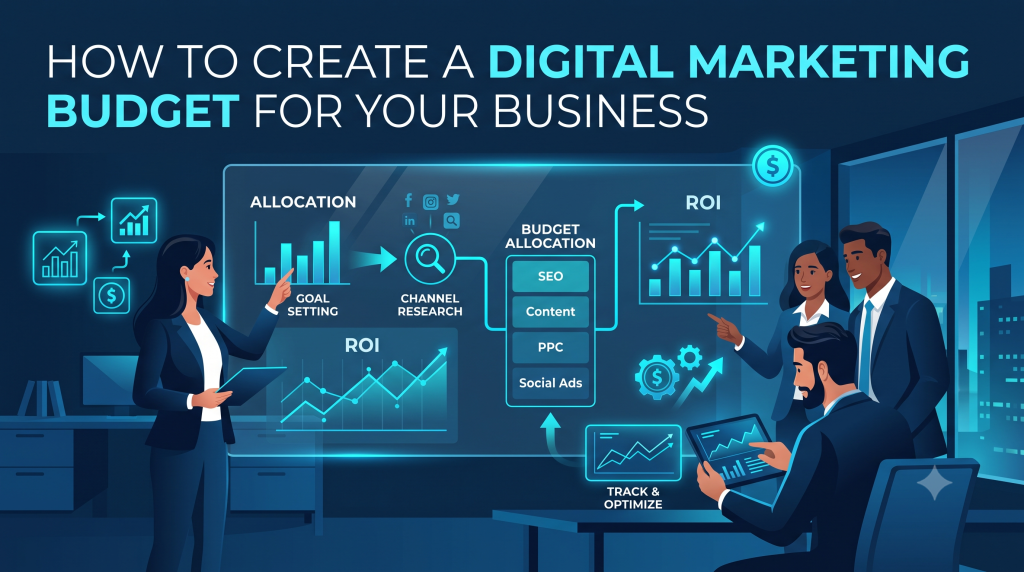
How to Create a Digital Marketing Budget for Your Business
What Is a Digital Marketing Budget? A digital marketing budget is the portion of your overall business budget set aside for online marketing, together with a breakdown of how that money will be spent and what it is expected to produce. It is wider than ad spend. A realistic budget covers the full cost of attracting and keeping customers online: SEO — technical work, content, link building, local listings Google Ads / paid search — search, shopping, Performance Max, YouTube Paid social — Meta, LinkedIn, TikTok, Pinterest, X Organic social media marketing — content creation and community management Content marketing — blogs, guides, video, podcasts Email marketing — platform, list growth, automation, campaigns Influencer or creator partnerships Website and landing page optimization Marketing tools and software — CRM, email, SEO tools, scheduling Analytics and tracking — setup, dashboards, attribution Creative production — design, video, photography, copywriting Agency, consultant, or freelancer fees Marketing automation Marketing Budget vs Advertising Budget vs Digital Marketing Budget Term What it covers Marketing budget All marketing, online and offline — includes salaries, events, print, sponsorship Advertising budget Paid media only — money paid directly to ad platforms Digital marketing budget Everything online: paid media, organic, content, tools, people, production Marketing technology budget Software and subscriptions — CRM, email platform, SEO tools, analytics, design tools A common mistake is budgeting only for the advertising budget, then being caught off guard by the cost of creative, landing pages, tools, and the person managing it all. The digital marketing budget is the honest number. Why Your Business Needs a Digital Marketing Budget A budget is not bureaucracy. It is the difference between spending money on marketing and investing money in marketing. Better financial planning. You know what is going out and when, which makes cash flow predictable. Controlled spending. Ad platforms will happily spend whatever you give them. A budget sets the ceiling. Clear priorities. Money follows strategy. If everything is funded, nothing is prioritised. Easier performance measurement. You cannot judge a channel’s return without knowing its cost. Better resource allocation. You can move budget from weak channels to strong ones on evidence, not instinct. Reduced waste. Most wasted ad spend is untracked spend. Predictable experimentation. A testing line item lets you try new things without gambling the core budget. Easier scaling. When a channel works, you know exactly what to increase and by how much. How to Create a Digital Marketing Budget Step by Step The framework below works whether you are budgeting $500 a month or $500,000 a year. Work through the steps in order — each one feeds the next. Step 1: Define Your Business Goals Your business goal decides how the money should be shaped. Different objectives need very different investments. Increase sales → performance channels with trackable returns Generate leads → search ads, lead magnets, landing pages, CRM Increase website traffic → SEO, content, paid discovery Build brand awareness → broad-reach video and social, less directly measurable Launch a new product → front-loaded spend on awareness plus retargeting Enter a new market → research, testing, localisation, longer runway Increase repeat purchases → email, SMS, loyalty, retention ads Write down one primary goal and no more than two secondary goals. A budget split across five equal priorities usually delivers five mediocre results. Step 2: Identify Your Target Audience Channel choice should follow your audience, not the other way round. Answer these questions before allocating a single unit of currency: Who exactly are your customers — demographics, job roles, company size? Where do they already spend time online? What do they type into a search engine when they have the problem you solve? What problems are they trying to fix? What influences their decision — reviews, peers, price, brand, credentials? How long is the buying cycle — minutes, days, or months? A business selling $30 impulse products and a business selling $30,000 contracts should not have the same channel mix. A short buying cycle rewards paid social and retargeting. A long buying cycle rewards content, SEO, email nurturing, and sales enablement. Step 3: Understand Your Customer Acquisition Economics This is the step most businesses skip, and it is the reason most budgets fail. You cannot decide how much you can afford to spend on a customer until you know what a customer is worth. Average Order Value (AOV)Total Revenue ÷ Number of OrdersPlain English: the average amount a customer spends per transaction. Customer Lifetime Value (CLV or LTV)AOV × Purchase Frequency × Average Customer LifespanPlain English: the total revenue a typical customer generates before they stop buying. A margin-based version uses gross profit per order instead of AOV. Customer Acquisition Cost (CAC)Total Sales & Marketing Costs ÷ Number of New CustomersPlain English: what you paid, in total, to win one customer. Cost Per Lead (CPL)Total Campaign Cost ÷ Number of Leads Conversion Rate(Conversions ÷ Visitors) × 100 Lead-to-Customer Rate(Customers ÷ Leads) × 100 The rule of thumb is simple: your CAC needs to stay comfortably below the profit your customer generates. How far below depends on your margins, your growth targets, and how much cash you have to fund growth today. Step 4: Determine How Much You Can Actually Spend A budget you cannot fund is a wish list. Before committing to a number, weigh these factors: Revenue — current and projected Profit margins — high-margin businesses can spend more aggressively Cash flow — can you fund three months of spend before results arrive? Business stage — early-stage businesses usually invest for growth, mature ones optimise for efficiency Growth targets — a 10% growth target needs a very different budget from a 100% target Customer acquisition economics — what the numbers from Step 3 tell you Existing customer base — a large base lowers the cost of repeat revenue Competition — crowded auctions raise your cost per click Sales cycle — longer cycles mean longer payback periods and more working capital tied up There is no single correct percentage of revenue to spend on digital