Author name: shri.7812@

Uncategorized

AI Marketing Tools Every Business Should Know in 2026

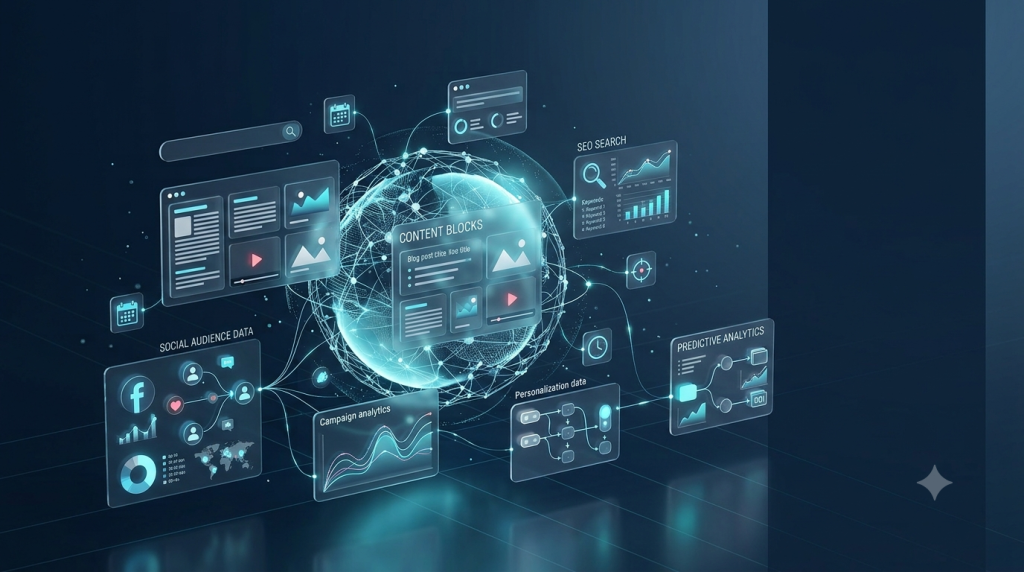
How Does AI-Powered Digital Advertising Work? Most AI advertising systems follow the same underlying sequence. Understanding it helps you spot where things go wrong. 1. DataAccount history, conversion records, CRM data, catalogue feeds, creative performance and audience information are collected and organised. 2. SignalsSearch behaviour, website interactions, device and context data, funnel position and engagement patterns. 3. AI analysisModels look for patterns connecting signals to outcomes — which combinations tend to precede a conversion. 4. PredictionThe system estimates the probability of a click, lead, sale or high-value action for a given impression opportunity. 5. Decision or recommendationA bid is placed, an audience is expanded, a creative is selected, or a recommendation is surfaced for the advertiser to approve. 6. Ad deliveryThe ad is served in the placement the system judges most likely to achieve the objective. 7. MeasurementOutcomes are recorded and fed back into the model. 8. OptimizationBudgets, bids, audiences and creatives shift based on what the data shows. A note on responsibility. Every stage above depends on data. Advertisers are responsible for collecting it lawfully, minimising what they store, honouring consent choices and complying with applicable privacy requirements in the markets they operate in. AI does not remove that obligation — it increases the stakes. Traditional Digital Advertising vs AI-Powered Advertising Traditional advertising is not obsolete. Most modern accounts combine automation with deliberate human decisions. The table below shows how the balance has shifted. Area Traditional Approach AI-Powered Approach Audience targeting Manual keyword lists, hand-built interest and demographic audiences Signal-based audience expansion and predictive segments driven by conversion patterns Bid management Manual or rule-based bids set per keyword or placement Automated bidding that adjusts at auction time toward a chosen target Creative testing A few hand-written variations rotated manually Large variation sets generated and tested faster, with human review Personalization Broad segments receive the same message Message, product and format adapted to context and behaviour signals Campaign optimization Periodic manual reviews and adjustments Continuous adjustments within advertiser-set boundaries Data analysis Spreadsheets, manual segmentation, sampled reporting Large-scale pattern detection and anomaly flagging Reporting Manually assembled dashboards Automated summaries and AI-drafted insight narratives Scalability Growth limited by team capacity More campaigns and variations handled per person, if governance is in place Human involvement Operates the levers directly Sets objectives, feeds data, reviews output, governs automation How AI Is Changing Digital Advertising Ten shifts are reshaping how campaigns are planned, built and managed. Each one changes the work an advertiser actually does day to day. 1. AI-Powered Audience Targeting What changed: advertisers used to build audiences by hand, defining interests, demographics and keyword lists before launch. How AI enables it: platforms now analyse behavioural signals, conversion patterns and contextual data to build and expand audience segments automatically. This supports audience segmentation, predictive audiences that estimate conversion likelihood, and similar-audience concepts based on real customer behaviour rather than assumptions. Why it matters: models can find combinations of signals a human would not think to test — and can respond to changing intent faster than manual audience refreshes. What advertisers should do: treat audiences as signals rather than handcuffs. Keep the strongest first-party data flowing in, and avoid layering so many exclusions and restrictions that the system has almost no room to learn. 2. Automated Bidding What changed: manual bidding required constant adjustment across keywords, placements and devices. How AI enables it: machine-learning bidding evaluates auction context and predicted outcomes at the moment of the impression. Conversion-focused strategies aim at a target cost per action; value-based strategies aim at return on ad spend where the platform supports it. Why it matters: bids can respond to conditions no human could monitor in real time. What advertisers should do: automated bidding depends on accurate conversion tracking, a sensible campaign objective and enough conversion volume to learn from. It does not always outperform well-managed manual bidding — particularly in low-volume or unusual accounts. Test rather than assume. 3. AI-Generated Ad Copy What changed: copywriting was a manual, sequential task — often the bottleneck in a launch. How AI enables it: generative tools help draft headlines, descriptions, primary text, calls to action and messaging variations at speed, including adaptations for different formats and lengths. Why it matters: teams can move from three variations to twenty in the time it used to take to write five. What advertisers should do: every AI-generated line still needs human review for brand consistency, factual accuracy, claim substantiation and advertising policy compliance. A headline that reads well but overstates a benefit is a liability, not a win. 4. AI-Generated Ad Creatives What changed: producing images, video concepts and format adaptations required designers and editors. How AI enables it: AI-assisted tools can generate images, backgrounds, product visuals and creative variations, and can adapt one asset into multiple sizes and ratios. Why it matters: creative volume is one of the strongest levers in paid social and display, and AI makes volume affordable. What advertisers should do: protect brand identity, respect copyright and licensing, disclose AI-generated content where required by platform policy or law, and quality-check every asset. Volume without quality simply produces more expensive noise. 5. Dynamic Personalization What changed: personalization meant a handful of audience buckets receiving slightly different messages. How AI enables it: systems can tailor product selections, offers, creative and messaging based on segment, context, interests, previous interactions, product behaviour and funnel stage. Why it matters: relevance improves attention, and attention is the scarcest resource in paid media. What advertisers should do: personalization must stay within lawful and ethical boundaries. Do not use sensitive personal information irresponsibly, and give users meaningful control over how their data shapes what they see. 6. Predictive Analytics What changed: forecasting relied on historical averages and human judgement. How AI enables it: models assist with forecasting, customer behaviour analysis, conversion likelihood, budget planning, demand patterns and campaign performance analysis. Why it matters: better forecasts mean better budget decisions and fewer surprises mid-quarter. What advertisers should do: remember that a prediction is a probability, not a promise.
Uncategorized

How AI Is Changing Digital Advertising

How Does AI-Powered Digital Advertising Work? Most AI advertising systems follow the same underlying sequence. Understanding it helps you spot where things go wrong. 1. DataAccount history, conversion records, CRM data, catalogue feeds, creative performance and audience information are collected and organised. 2. SignalsSearch behaviour, website interactions, device and context data, funnel position and engagement patterns. 3. AI analysisModels look for patterns connecting signals to outcomes — which combinations tend to precede a conversion. 4. PredictionThe system estimates the probability of a click, lead, sale or high-value action for a given impression opportunity. 5. Decision or recommendationA bid is placed, an audience is expanded, a creative is selected, or a recommendation is surfaced for the advertiser to approve. 6. Ad deliveryThe ad is served in the placement the system judges most likely to achieve the objective. 7. MeasurementOutcomes are recorded and fed back into the model. 8. OptimizationBudgets, bids, audiences and creatives shift based on what the data shows. A note on responsibility. Every stage above depends on data. Advertisers are responsible for collecting it lawfully, minimising what they store, honouring consent choices and complying with applicable privacy requirements in the markets they operate in. AI does not remove that obligation — it increases the stakes. Traditional Digital Advertising vs AI-Powered Advertising Traditional advertising is not obsolete. Most modern accounts combine automation with deliberate human decisions. The table below shows how the balance has shifted. Area Traditional Approach AI-Powered Approach Audience targeting Manual keyword lists, hand-built interest and demographic audiences Signal-based audience expansion and predictive segments driven by conversion patterns Bid management Manual or rule-based bids set per keyword or placement Automated bidding that adjusts at auction time toward a chosen target Creative testing A few hand-written variations rotated manually Large variation sets generated and tested faster, with human review Personalization Broad segments receive the same message Message, product and format adapted to context and behaviour signals Campaign optimization Periodic manual reviews and adjustments Continuous adjustments within advertiser-set boundaries Data analysis Spreadsheets, manual segmentation, sampled reporting Large-scale pattern detection and anomaly flagging Reporting Manually assembled dashboards Automated summaries and AI-drafted insight narratives Scalability Growth limited by team capacity More campaigns and variations handled per person, if governance is in place Human involvement Operates the levers directly Sets objectives, feeds data, reviews output, governs automation How AI Is Changing Digital Advertising Ten shifts are reshaping how campaigns are planned, built and managed. Each one changes the work an advertiser actually does day to day. 1. AI-Powered Audience Targeting What changed: advertisers used to build audiences by hand, defining interests, demographics and keyword lists before launch. How AI enables it: platforms now analyse behavioural signals, conversion patterns and contextual data to build and expand audience segments automatically. This supports audience segmentation, predictive audiences that estimate conversion likelihood, and similar-audience concepts based on real customer behaviour rather than assumptions. Why it matters: models can find combinations of signals a human would not think to test — and can respond to changing intent faster than manual audience refreshes. What advertisers should do: treat audiences as signals rather than handcuffs. Keep the strongest first-party data flowing in, and avoid layering so many exclusions and restrictions that the system has almost no room to learn. 2. Automated Bidding What changed: manual bidding required constant adjustment across keywords, placements and devices. How AI enables it: machine-learning bidding evaluates auction context and predicted outcomes at the moment of the impression. Conversion-focused strategies aim at a target cost per action; value-based strategies aim at return on ad spend where the platform supports it. Why it matters: bids can respond to conditions no human could monitor in real time. What advertisers should do: automated bidding depends on accurate conversion tracking, a sensible campaign objective and enough conversion volume to learn from. It does not always outperform well-managed manual bidding — particularly in low-volume or unusual accounts. Test rather than assume. 3. AI-Generated Ad Copy What changed: copywriting was a manual, sequential task — often the bottleneck in a launch. How AI enables it: generative tools help draft headlines, descriptions, primary text, calls to action and messaging variations at speed, including adaptations for different formats and lengths. Why it matters: teams can move from three variations to twenty in the time it used to take to write five. What advertisers should do: every AI-generated line still needs human review for brand consistency, factual accuracy, claim substantiation and advertising policy compliance. A headline that reads well but overstates a benefit is a liability, not a win. 4. AI-Generated Ad Creatives What changed: producing images, video concepts and format adaptations required designers and editors. How AI enables it: AI-assisted tools can generate images, backgrounds, product visuals and creative variations, and can adapt one asset into multiple sizes and ratios. Why it matters: creative volume is one of the strongest levers in paid social and display, and AI makes volume affordable. What advertisers should do: protect brand identity, respect copyright and licensing, disclose AI-generated content where required by platform policy or law, and quality-check every asset. Volume without quality simply produces more expensive noise. 5. Dynamic Personalization What changed: personalization meant a handful of audience buckets receiving slightly different messages. How AI enables it: systems can tailor product selections, offers, creative and messaging based on segment, context, interests, previous interactions, product behaviour and funnel stage. Why it matters: relevance improves attention, and attention is the scarcest resource in paid media. What advertisers should do: personalization must stay within lawful and ethical boundaries. Do not use sensitive personal information irresponsibly, and give users meaningful control over how their data shapes what they see. 6. Predictive Analytics What changed: forecasting relied on historical averages and human judgement. How AI enables it: models assist with forecasting, customer behaviour analysis, conversion likelihood, budget planning, demand patterns and campaign performance analysis. Why it matters: better forecasts mean better budget decisions and fewer surprises mid-quarter. What advertisers should do: remember that a prediction is a probability, not a promise.
Uncategorized

AI Personalization in Digital Marketing: The Next Big Shift

What Is AI Personalization in Digital Marketing? Definition: AI personalization in digital marketing is the use of artificial intelligence – including machine learning, predictive analytics and generative AI – to analyze customer data and behavioral signals, then automatically adapt marketing content, offers, recommendations and experiences to an individual customer or a small, dynamic group. In simple terms, traditional personalization asks, What do we already know about this customer? AI personalization also asks, What is this customer likely to want next, based on what they are doing right now? It helps to break the concept into its parts: Artificial intelligence: Software that performs tasks such as pattern recognition, prediction and language generation. Personalization: Adapting an experience to a person’s preferences, behavior or context. Customer data: Information you lawfully collect, such as first-party data from your website, CRM, app and email platform. Behavioral signals: Clicks, scrolls, search queries, time on page, repeat visits, cart activity and content engagement. Context: Device, channel, time of day and location – where lawfully collected and appropriate. Predictive models: Statistical models that estimate the likelihood of a future action, such as a purchase or a churn risk. Recommendations: The visible output – a product, article, offer or next step. A simple example A visitor arrives at an e-commerce website. Rather than showing every visitor the same homepage, an AI system may use available signals – previous browsing, search terms used on site, products viewed, referral source – to help determine which products, categories or offers are more likely to be relevant to that visitor. The same logic applies to a blog recommending related articles, a SaaS platform suggesting a feature a user has not tried, or a travel site showing destination content that matches a previously viewed trip. It is important to be precise here: actual capabilities depend on the platform, the volume and quality of data available, the configuration, and the quality of the underlying strategy. AI does not automatically produce relevance – it produces probabilities that still need to be tested. How Does AI Personalization Work? Most AI personalization systems follow a similar sequence. The exact technology varies, but the logic is consistent: Data Collection → Data Processing → Customer Understanding → Prediction → Personalization → Delivery → Measurement → Optimization 1. Data collection The system gathers signals from sources you are permitted to use: website behavior, email engagement, CRM records, purchase history, app activity and on-site search queries. 2. Data processing Raw data is cleaned, deduplicated and structured. This stage matters more than most marketers expect. Poor-quality inputs produce poor recommendations, no matter how advanced the model is. 3. Customer understanding The system builds a picture of the customer – interests, lifecycle stage, intent level, preferred channel. This may be an individual profile or a dynamic micro-segment. 4. Prediction Predictive models estimate probabilities: the likelihood of a purchase, a subscription renewal, a churn risk, or interest in a specific category. 5. Personalization decision The system decides what to show. This could be a product recommendation, a content block, a subject line variant, an offer, or a next-best action. 6. Delivery The personalized experience is rendered in the right channel at the right moment – website, email, app, ad or chat. 7. Measurement Results are tracked against defined metrics such as engagement, conversion rate, retention or customer satisfaction. 8. Optimization The model learns from outcomes and adjusts. This continuous loop is what separates AI personalization from static rule-based personalization. Common data types used Browsing and navigation behavior Purchase and subscription history On-site and in-app search behavior Content interactions – reads, watches, downloads Email engagement – opens, clicks, replies, unsubscribes Product and category interactions Location or context, where lawfully collected and appropriate Device and channel signals Stated customer preferences CRM information such as support history and lifecycle stage Consent, privacy and data quality are not add-ons – they are inputs. A personalization system is only as good as the data feeding it, and only as trustworthy as the permissions behind that data. Collect what you need, explain why you need it, allow people to opt out, and secure what you store. Data quality and data ethics are the same conversation. AI Personalization vs Traditional Personalization The difference is not that one is modern and the other is outdated. The difference is in how each handles complexity, speed and scale. Factor Traditional Personalization AI-Powered Personalization Data processing Manual analysis; limited volume Automated analysis across large datasets Customer segmentation Broad, static segments Dynamic micro-segments and individual-level signals Real-time adaptation Limited; usually rule-based Can adapt within a session Predictive capability Mostly historical reporting Probability-based forward prediction Recommendation systems Hand-built rules, e.g. best sellers Learns from behavior and improves over time Automation Trigger-based workflows Decisioning and content selection automated Scalability Hard to scale beyond a few segments Designed to handle large audiences Human involvement High – rules written manually Shifts toward oversight, strategy and review Traditional personalization is not obsolete. In many businesses, a well-built segmentation strategy plus basic automation delivers most of the value. AI becomes useful when the number of customers, products, content pieces or journeys grows beyond what a team can realistically manage with manual rules. The practical view: AI extends existing personalization strategies. It does not replace the strategic thinking behind them. Why Is AI Personalization Becoming Important? 1. Increasing customer expectations People now encounter personalized experiences across streaming, shopping, music and social platforms. Those experiences shape what they expect from every other brand, including yours. 2. Growth of digital customer journeys A single customer may interact with a brand across search, social, email, chat, app and website before converting. Managing that complexity with manual rules alone becomes impractical. 3. Increasing data availability Businesses collect more first-party data than ever – but volume alone is not value. AI helps convert that data into usable signals. 4. Need for more relevant marketing Generic messaging competes for the same attention as everything else in a crowded inbox and feed. Relevance is one of the few reliable differentiators.

Uncategorized

AI-Powered Digital Marketing: Benefits, Challenges & Best Practices

AI-powered digital marketing has moved from a novelty to a working part of the marketing stack. SEO teams use it to cluster keywords. Paid media managers use it to test creative variations. Email marketers use it to predict send times. Content teams use it to draft, summarise and repurpose. The shift happened quietly, but it is now difficult to find a marketing workflow that AI has not touched somewhere. The reason is simple. Marketing produces more data than any human team can read, and customers expect relevance at every touchpoint. AI is a practical answer to both problems. Machine learning finds patterns in behaviour data. Generative AI produces drafts at speed. Natural language processing helps software understand what people actually mean when they search, complain or ask a question. But AI is not a switch you flip to get better results. Teams that treat it as a replacement for strategy tend to produce more content, not better marketing. Teams that treat it as a capable assistant — one that needs clear instructions, clean data and a human editor — tend to get real leverage. This guide covers what AI-powered digital marketing is, how it works, where it helps most, where it fails, and how to build a workflow that keeps humans in control of the decisions that matter. Key takeaway: AI is best used as a decision-support and production tool. It accelerates research, drafting and analysis. It does not set strategy, own brand voice, or take responsibility for accuracy. What’s Inside What Is AI-Powered Digital Marketing? How Does It Work? Key Applications Across Channels Benefits of AI-Powered Digital Marketing Challenges and Risks Can AI Replace Digital Marketers? 10 Best Practices The AI + Human Marketing Workflow Practical Example: A Local Dental Clinic AI Marketing Tool Categories How to Start: 8-Step Roadmap The Future of AI in Marketing AI vs Traditional Digital Marketing Frequently Asked Questions What Is AI-Powered Digital Marketing? AI-powered digital marketing is the use of artificial intelligence technologies to research, create, distribute, optimise and measure marketing activity. AI handles pattern recognition, prediction and repetitive production tasks. Humans set the goals, strategy, brand direction and final judgement. How It Differs From Traditional Digital Marketing Traditional digital marketing relies on manual analysis and rules set in advance. An example would be: if a cart is abandoned for 24 hours, send a reminder email. The rule is written by a person, and it behaves the same way for everyone who matches it. AI-powered marketing learns from data and adapts. It can estimate which customers are most likely to convert, generate multiple creative variations, and shift budget toward the combinations showing stronger signals. The marketer still defines the objective and the boundaries — the system handles the volume. The Four Technologies Behind It Machine learning — models that improve as they process more data. Used for segmentation, lead scoring, churn prediction and forecasting. Generative AI — models that create new text, images, audio or video drafts. Used for copy, creative concepts, summaries and translations. Natural language processing (NLP) — helps software understand and generate human language. Used for search intent analysis, sentiment analysis and chatbots. Predictive analytics — uses historical data to estimate future outcomes. Used for customer lifetime value, demand forecasting and budget planning. A Simple Example Imagine an online running-gear store. The AI system notices a pattern: customers who buy running shoes frequently add socks or insoles within two weeks. It flags that segment automatically. A human then decides the offer, the message and the timing rule. AI executes the campaign, measures the response, and refines the segment. The technology found the pattern — the person decided what to do about it. That division of labour is the heart of effective AI marketing. How Does AI-Powered Digital Marketing Work? Most AI marketing systems follow the same loop. Understanding it makes it easier to spot where things go wrong. Data collection. The system gathers first-party data — website behaviour, CRM records, email engagement, purchase history — alongside campaign and search data. AI analysis. Models scan large datasets for patterns, correlations and outliers that would be impractical to find manually. Insights. Outputs appear as audience segments, lead scores, forecasts, topic clusters or flagged anomalies. Prediction and automation. The system estimates an outcome and, where appropriate, triggers an action. Marketing action. An email is sent, an ad variation is served, a content brief is generated, a chat reply is drafted, a product is recommended. Measurement. Results are tracked against a defined KPI — not just clicks, but the outcome the business actually cares about. Optimisation. Feedback loops refine targeting, timing, creative and budget allocation over time. Worth remembering: the loop is only as good as the data going in and the human decisions wrapped around it. Poor data produces confident but useless recommendations. Key Applications of AI in Digital Marketing AI for SEO AI speeds up the research-heavy parts of SEO: keyword discovery, search intent analysis, topic clustering, content gap analysis, SERP analysis and content brief creation. It can also assist with technical work such as reviewing crawl data or spotting internal linking opportunities. Grouping thousands of keywords into logical topic clusters Classifying queries by intent (informational, commercial, transactional) Identifying pages competitors rank for that you do not cover Drafting structured content briefs for writers Important caveat: AI does not guarantee higher rankings. Search engines reward helpful, reliable, people-first content. AI can help you produce that faster, but quality and usefulness still decide the outcome. AI for Content Marketing Content teams use AI for ideation, outlining, research summarisation, first drafts, personalisation, repurposing and editing. It is especially effective at turning one substantial asset — a webinar, a report, a customer interview — into several formats. Every AI-assisted piece should pass through human review for accuracy, originality and voice. AI drafts; people verify, add experience and take responsibility. AI for Social Media Marketing AI supports content idea generation, caption drafting, audience analysis, sentiment analysis, social listening, scheduling and performance reporting. It helps teams

Uncategorized

How AI Is Changing Digital Marketing in 2026

How AI Is Changing Digital Marketing in 2026 Something fundamental shifted in digital marketing over the past twelve months. It wasn’t a new social platform or an algorithm tweak. It was the realization that a growing share of your audience no longer starts their journey with a search engine. They start it with an AI that answers questions, synthesizes opinions, and recommends solutions—often without ever sending a click to your website. By early 2026, 68% of Google searches end without a click. ChatGPT has crossed 800 million weekly users. Google’s AI Mode has surpassed one billion monthly active users. Meanwhile, 94% of marketers are investing broadly in AI to drive efficiency and impact, according to Experian’s 2026 Digital Trends report. The transformation isn’t about AI replacing marketers. It’s about AI reshaping how marketing gets done—from how content is created and discovered to how campaigns are optimized and customers are served. This article breaks down exactly what’s changed, what it means for your business, and how to adapt without losing the human element that makes marketing work. Quick Answer: How Is AI Changing Digital Marketing in 2026? AI is changing digital marketing in 2026 by shifting the focus from clicks to citations, from campaigns to autonomous agents, and from manual optimization to real-time predictive systems. Marketers now use AI for content creation, SEO, personalization, advertising, social media, and analytics—while human oversight remains essential for strategy, creativity, and brand trust. The biggest change: visibility now depends on being cited by AI answer engines, not just ranking on search results pages. What Is AI in Digital Marketing? AI in digital marketing refers to the use of artificial intelligence technologies—machine learning, natural language processing, computer vision, and generative AI—to automate, optimize, and personalize marketing activities across channels. In practice, AI powers several marketing functions: Machine learning analyzes customer data to predict behavior, segment audiences, and optimize campaign performance. Generative AI creates content—text, images, video, and audio—at scale based on prompts and brand guidelines. Natural language processing (NLP) enables chatbots, sentiment analysis, and semantic search understanding. Predictive analytics forecasts trends, customer lifetime value, and churn probability. Recommendation systems suggest products, content, and offers based on individual user behavior. Marketing automation handles repetitive tasks like email sequencing, ad bidding, and lead scoring. The key distinction in 2026 is that AI has moved from experimental tools to embedded infrastructure. According to Gartner’s 2026 Hype Cycle for Digital Marketing, CMOs are allocating an average of 15.3% of their budgets to AI initiatives, while 73% face high or overly ambitious growth targets. The pressure to do more with less has made AI adoption a strategic necessity, not an option. Click here How AI Is Changing Digital Marketing in 2026 The changes happening in 2026 aren’t incremental. They’re structural. Here’s where the transformation is most visible. AI-Powered Content Creation Content creation is the most visible area where AI has changed workflows. Blog posts, ad copy, social media captions, email campaigns, product descriptions, and even video scripts can now be drafted, revised, and optimized with AI assistance. According to a 2026 Clutch survey conducted with Conductor, 75% of content marketers leverage AI-powered tools within their standard content creation process. But the real shift isn’t about volume. It’s about velocity and personalization. AI enables teams to: Generate multiple content variations for A/B testing at scale Repurpose long-form content into social posts, emails, and short video scripts Personalize messaging for different audience segments without manual rewriting Adapt tone and style for different platforms and buyer personas Human oversight remains critical. AI-generated content still requires fact-checking, brand voice alignment, and editorial judgment. The most effective teams use AI for the first draft and human editors for the final polish. This is why 81% of content marketers feel positive about AI’s role, according to the Clutch report—they see it as a tool that handles grunt work, not one that replaces their expertise. AI and SEO SEO is not dead. It’s evolving—fast. AI is changing how search engines understand content, how users discover information, and how marketers optimize for visibility. Key shifts in AI-driven SEO for 2026: Search intent analysis goes beyond keywords to understand the “why” behind queries using NLP. AI Overviews and AI Mode now appear for approximately 48% of tracked queries, up from 30% a year earlier. This has reduced click-through rates for position 1 by roughly 58%, according to Ahrefs data cited by Infosys. Topic clustering and entity optimization help AI systems understand your content’s depth and authority. Semantic search rewards content that answers questions comprehensively, not content that repeats keywords. Zero-click searches mean brands must optimize for visibility within AI answers, not just clicks. The practical takeaway: SEO fundamentals—technical health, site architecture, content quality—remain the bedrock. But the goal is shifting from ranking to being cited. As Patrick Reinhart of Conductor noted, the most effective teams treat AEO/GEO as an evolution of SEO, not a replacement. AI and Generative Engine Optimization (GEO) Generative Engine Optimization (GEO) is the practice of structuring content so AI systems like ChatGPT, Google Gemini, Perplexity, and Claude retrieve, understand, and cite it when generating answers. GEO differs from traditional SEO in fundamental ways. Traditional SEO optimizes for ranked lists of links. GEO optimizes for a single synthesized answer that cites one to three sources. According to Infosys, generative engines select sources based on semantic depth, entity clarity, and structural extractability—not keyword rank. What GEO requires: Direct answers placed early in content, not buried after long introductions Structured formatting with clear headings, lists, and definitions that AI can extract Original research and data that AI systems can cite as authoritative Consistent entity signals across your website and third-party platforms Topical authority built through comprehensive coverage of your niche Citations and trustworthy sources that demonstrate expertise A 2026 study of 34,234 AI responses found that ChatGPT cited brands in just 0.59% of answers, while Perplexity cited brands in 13.05%. The gap suggests that different AI platforms have different citation behaviors—and that GEO strategy needs to account for

Uncategorized

Google Ads for E-commerce Businesses

What Is Google Ads for E-commerce? Direct answer: Google Ads for e-commerce is a paid advertising system that lets online stores promote products across Google Search, Shopping, YouTube, Display and Discover. Product data, keywords, audience signals and creative assets determine where ads appear. Businesses typically pay per click or per thousand impressions, and performance is measured through conversion tracking. In practice, e-commerce advertising on Google looks different from lead-generation advertising. A service business might chase form fills. An online store chases completed purchases, average order value, and repeat customers. Three components work together: Google Ads — where campaigns, budgets and bids live. Google Merchant Center — where your product catalogue is stored, validated and matched to shopping surfaces. Your product feed and landing pages — the raw material Google uses to decide whether to show your ad, and what happens after the click. If any one of those three is weak, the other two cannot compensate. A perfect campaign structure cannot rescue a feed with missing prices, and a clean feed cannot rescue a product page that loads slowly on mobile. E-commerce ads can appear on the Google Search results page, the Shopping tab, Google Images, YouTube, Gmail, Discover, and across millions of partner websites and apps. Most e-commerce advertisers pay on a cost-per-click (CPC) basis, though impression-based and conversion-based models exist depending on the campaign type. How Does Google Ads Work for E-commerce Businesses? The mechanics are less mysterious than they look. Here is the sequence from setup to sale. Product and business setup. You create a Google Ads account and a Merchant Center account, and connect them. Product data. Your product catalogue is uploaded — either by feed, API, or platform integration. Feed processing. Google reviews titles, descriptions, prices, availability, images and identifiers, then approves or disapproves each item. Campaign creation. You choose a campaign type, set a budget, and define conversion goals. Targeting and signals. Keywords, audiences, demographics, device and location settings narrow who sees the ad. Bidding. You set a strategy — manual or automated — that tells Google how much a click or conversion is worth. The ad auction. When someone searches, Google runs a near-instant auction combining your bid, ad quality, relevance, landing page experience and expected impact. Ad serving. Winning ads appear in the position and format Google determines is most relevant. The click. A shopper clicks through. You pay the CPC for most campaign types. Landing. The shopper arrives on a product or category page. This is where most of the outcome is decided. Conversion. The shopper adds to cart and purchases — tracked by your conversion tag. Measurement and optimization. You review search terms, product performance, ROAS and margins, then adjust. Notice that steps 10 to 12 are not really Google’s responsibility. Google delivers the traffic. Your page, pricing, shipping terms and checkout decide what happens next. Advertisers who forget this tend to blame the platform for a website problem. Why Should E-commerce Businesses Use Google Ads? The case for paid search in e-commerce rests on intent. Someone searching for a specific product is further along than someone scrolling a social feed. That proximity to purchase is why paid search often produces the most measurable return in a retail media mix. High-intent traffic. You appear at the moment of consideration. Product visibility. Shopping and Performance Max placements show the actual product image and price, not just text. Fast testing. You can validate demand for a new product in days rather than waiting months for organic rankings. Measurable performance. Clicks, revenue and ROAS are trackable to the product level. Remarketing. You can re-engage people who viewed a product but did not buy. Scalability. Budgets can be increased on demand when performance supports it. Revenue attribution. You can see which products and queries actually generate sales. Data-driven decisions. Performance data informs pricing, merchandising and inventory planning. When Google Ads may not be the right first move: very thin margins, products with no existing search demand, a website that converts poorly on mobile, or a business without the capacity to fulfil a sudden increase in orders. In those cases, fixing the fundamentals first usually costs less than advertising into a leaky funnel. Types of Google Ads Campaigns for E-commerce Not every campaign type deserves the same share of your budget. Each one solves a different problem. 1. Shopping Ads Shopping ads pull product data from Merchant Center and display an image, title, price and store name. There is no keyword to write — Google matches your feed against search queries. Best use case: Established product catalogues with clear pricing and demand. Advantages: Visual, price-transparent, strong commercial intent, product-level reporting. Limitations: Feed quality drives everything; limited control over exact query matching. Example: A furniture retailer showing a specific sofa at ₹24,999 with free delivery. 2. Performance Max Performance Max is a goal-based campaign that runs across Search, Shopping, YouTube, Display, Discover, Gmail and Maps from a single campaign. You supply product feeds, creative assets and audience signals, and automation decides placement and bidding. Best use case: Advertisers with solid conversion data and enough creative assets who want broad reach. Advantages: Wide coverage, less manual management, works across the full Google inventory. Limitations: Reduced granular control, limited visibility into where spend goes, and it can absorb budget that Shopping or Search would use more efficiently. Example: A supplements brand using one Performance Max campaign to reach buyers across YouTube, Discover and Shopping simultaneously. Performance Max is not automatically superior. It performs best when conversion tracking is accurate and the account has enough data for automation to learn from. 3. Search Campaigns Text ads triggered by keywords. You control the message, the keywords and the landing page. Best use case: Brand terms, category terms, competitor terms and high-intent product queries. Advantages: Precise control, strong for new product launches and promotions. Limitations: Requires ongoing keyword and negative keyword management. Example: Bidding on ‘waterproof running shoes size 10’ and sending traffic to a filtered collection page. 4. Display

Uncategorized

Landing Page Optimization for Google Ads

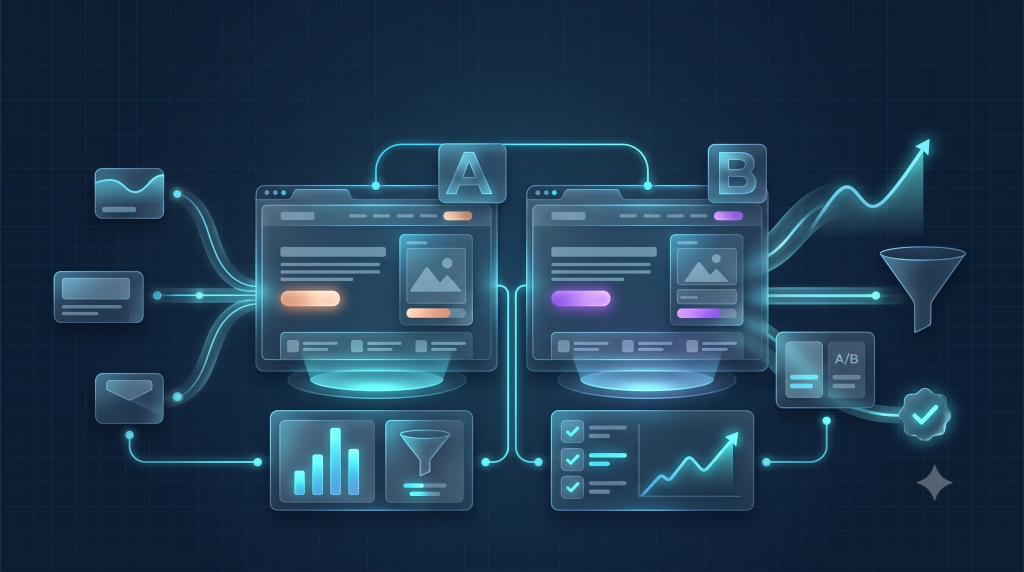
Short Answer Landing page optimization for Google Ads is the practice of aligning a paid-traffic destination page with the searcher’s intent, the ad’s promise, and a specific conversion goal. It involves message match, clear value propositions, friction reduction, trust signals, mobile performance, and continuous testing — all measured through accurate conversion tracking. The goal is not merely more clicks, but better-qualified conversions at a sustainable cost. Why Good Ads Still Fail to Convert You have done the keyword research. You wrote compelling ads. The click-through rate looks healthy. Budget is being spent. And yet the phone is not ringing, the forms are not filling, and the sales team is asking where the leads are. This is the most common frustration in paid search — and it almost always points to the same place: the landing page. The ad wins the click. The landing page must earn the conversion. Between those two moments, a visitor decides within seconds whether the offer is relevant, trustworthy, and worth their time. Google Ads optimization does not end when someone clicks. The post-click experience is where paid traffic either becomes business value or becomes wasted spend. This guide breaks down the complete PPC conversion journey: Search Intent → Keyword → Ad → Landing Page → User Experience → Trust → CTA → Conversion → Lead Quality → Business Value → Testing → Optimization. You will learn how to diagnose a weak landing page, fix the friction, and measure whether your changes actually improved results. What Is Landing Page Optimization for Google Ads? A landing page is the specific page a visitor reaches after clicking an ad. It is not necessarily your homepage. It is not necessarily a product page. It is the page that receives paid traffic and is responsible for converting that traffic into a measurable action. A PPC landing page differs from a homepage in purpose. A homepage serves many audiences and many goals. A landing page serves one campaign, one audience segment, one intent, and ideally one primary conversion goal. It should mirror the language of the ad, answer the question the searcher asked, and make the next step obvious. Consider a simple example: Search: “Google Ads management agency” Ad: “Google Ads Management for Growth-Focused Businesses” Landing Page: A dedicated page titled “Google Ads Management Services” CTA: “Book a Strategy Call” The continuity is deliberate. The searcher asked about Google Ads management. The ad confirmed the topic. The landing page delivered on that promise. The call to action gave a clear next step. That is message match in practice. Why Landing Pages Matter for Google Ads Landing page performance directly influences the economics of paid search. When conversion rate improves, the same number of clicks produces more conversions, which can reduce the effective cost per acquisition and improve return on ad spend. This is not a guarantee — it is a relationship that depends on offer quality, traffic relevance, competition, pricing, and tracking accuracy. Here is a simple illustration. Suppose two campaigns each receive 1,000 clicks at $2.00 per click. Campaign A has a 2% conversion rate: 20 conversions, $100 CPA. Campaign B has a 4% conversion rate: 40 conversions, $50 CPA. Same spend. Same traffic volume. Twice the conversions. The landing page experience is a major variable in that difference. Landing pages also influence landing page experience, one of the three components Google uses to calculate Quality Score — alongside expected click-through rate and ad relevance. Google describes Quality Score as its rating of the experience your ads and landing pages provide when people use search terms that match your keywords[reference:0]. A relevant, useful, fast, and trustworthy landing page can contribute to a better landing page experience rating. But Quality Score is a diagnostic metric, not a guaranteed outcome lever. A high Quality Score does not automatically produce more conversions, and a low score does not guarantee failure. The fundamental relationship is still: relevance to intent drives engagement, and engagement drives conversion. Homepage vs Dedicated PPC Landing Page When to send Google Ads traffic to the homepage: When the campaign is branded, when the search intent is broad and exploratory, or when the homepage genuinely provides a clear path to the relevant service within one scroll. This is rare for direct-response campaigns but can work for brand awareness or navigational queries. When to use a dedicated landing page: When the campaign promotes a specific offer, targets a specific keyword theme, or requires a single conversion goal. A dedicated page allows you to control the headline, the evidence, the form, the CTA, and the distraction level — all of which influence conversion probability. Neither option is universally correct. The decision should be based on intent specificity, offer focus, and measurable conversion goals. Search Intent & Landing Page Alignment The Perfect Google Ads Landing Page Structure Headline → Value Proposition → Benefits → Proof → Details → Objections → CTA 1. Headline Communicates what is offered, who it is for, the main benefit, and relevance to the ad. The visitor should know they are in the right place within seconds. 2. Subheadline Clarifies the value proposition. Supports the headline by adding specificity, audience qualification, or the mechanism behind the offer. 3. Primary CTA Examples: Get a Free Consultation, Request a Quote, Start Your Free Trial, Book an Appointment, Buy Now. Wording should reflect the actual conversion action. 4. Key Benefits Outcomes, not generic features. What changes for the customer after they act? Quantify when possible and honest. 5. Product/Service Explanation Enough detail to help the visitor make an informed decision. Not a wall of text. Scannable, benefit-oriented, and specific. 6. Social Proof Testimonials, reviews, case studies, client logos, ratings, verifiable results. Only genuine proof. Fake testimonials are unethical and often illegal. 7. Trust Signals Contact information, business identity, secure checkout indicators, policies, genuine guarantees, relevant certifications, privacy information. 8. Objection Handling Address common concerns directly: price, time commitment, risk, fit, switching cost, implementation difficulty. 9. FAQ Answer important buying questions. Good for

Uncategorized

Google Ads Keyword Strategy for 2026

Most advertisers focus on adding more keywords. But effective Google Ads performance depends on selecting the right searches, understanding intent, controlling irrelevant traffic, matching ads to landing pages, and measuring real business outcomes. This guide explains how to build, organize, optimize, and manage a Google Ads keyword strategy for 2026. You will learn how keyword targeting has changed, how to use broad, phrase, and exact match effectively, how to build negative keyword lists, how AI and automation affect keyword strategy, and how to connect keywords to ads, landing pages, and conversions. Short answer: A Google Ads keyword strategy in 2026 is the process of selecting, organizing, and optimizing keyword targeting to connect relevant search intent with the right ad message, landing page, and conversion action—while using negative keywords, match types, and conversion data to control costs and maximize business value. What Is a Google Ads Keyword Strategy? A Google Ads keyword strategy is a structured plan for selecting, grouping, and managing the keywords you bid on in paid search. It goes beyond building a keyword list. A strategy connects keywords to search intent, ad messaging, landing pages, conversion tracking, and business goals. A keyword is the targeting input you add to Google Ads. A search term is the actual phrase a user types or speaks. Your keywords influence when your ads are eligible to appear, but they do not guarantee exact matching. Google may show your ad for searches that share the meaning or intent of your keyword, depending on the match type and campaign settings. Keywords work together with ad copy, landing page relevance, audience signals, bid strategy, and conversion data. A keyword list without intent, business goals, or conversion tracking is not a strategy—it is a guess. Example: A digital marketing agency adds “Google Ads management services” as an exact match keyword. A user searches “hire a PPC agency for Google Ads.” Because exact match now matches on meaning and intent, the ad may appear. The agency’s landing page must then speak to PPC management—not generic digital marketing—to convert the visit. Why Google Ads Keyword Strategy Still Matters in 2026 Campaign automation has expanded significantly. Smart Bidding uses AI to set bids at auction time. Broad match is now powered by machine learning and has become the dominant match type by budget share. Performance Max runs across all Google networks without keyword targeting. Yet automation does not eliminate the need for human strategy. Automation needs direction. Smart Bidding needs accurate conversion data. Broad match needs negative keywords and search-term monitoring. AI Max needs clear business goals and high-quality assets. Without human strategy, automation can spend budget on traffic that never converts. Search journeys are more complex. Users research across multiple sessions, devices, and platforms. Rising competition increases costs. Conversion quality matters more than click volume. First-party data and offline conversion imports give bidding algorithms better signals. Keywords remain the foundation that connects business goals to search intent. Google Ads Keywords vs Search Terms: What Is the Difference? Concept Meaning Example Why It Matters Keyword The targeting input added by an advertiser emergency plumber Used to guide ad matching Search term The actual phrase typed or spoken by a user plumber near me open now Helps evaluate traffic quality Search query The user’s search request Same-day plumbing repair Used in search analysis Negative keyword A term used to exclude unwanted traffic jobs, course, free Helps reduce irrelevant clicks The Search Terms Report shows the actual queries that triggered your ads. It is essential for ongoing optimization because it reveals whether your keywords are attracting relevant traffic. Review it regularly and add negative keywords for irrelevant queries. How Search Intent Should Shape Your Keyword Strategy Search intent describes what a user wants when they search. It is the most important factor in keyword selection. Informational Intent Examples: how to repair a leaking tap, what is email marketing, how does solar energy work. These searches indicate learning. They may not be suitable for direct-response campaigns unless you have a content-led conversion path. Navigational Intent Examples: official Canva website, Google Ads login, Nike official store. These searches indicate the user wants a specific destination. They may be relevant for brand campaigns or irrelevant if you are not the brand. Commercial Investigation Intent Examples: best CRM software for small business, Google Ads agency pricing, compare accounting software. These searches indicate evaluation. They often convert well when paired with comparison-focused landing pages. Transactional Intent Examples: hire a digital marketing agency, buy running shoes online, book AC repair service. These searches indicate readiness to act. They often deserve careful testing and dedicated landing pages. Local Intent Examples: SEO agency near me, dentist in Prayagraj, laptop repair near me. These searches include location modifiers. They require local landing pages, geo-targeting, and call-focused campaigns. Intent Type Example Keyword Likely User Goal Possible Campaign Use Important Caution Informational what is SEO Learn a concept Content marketing, retargeting Low direct conversion intent Navigational Google Ads login Reach a specific site Brand campaigns Only relevant if you own the brand Commercial investigation best CRM software Evaluate options Comparison landing pages Requires strong differentiation Transactional hire SEO agency Take action Lead gen, service pages High competition, higher CPCs Local dentist near me Find nearby service Local campaigns, call ads Requires geo-targeting and local pages Keyword Research Process for Google Ads in 2026 Step 1: Define the Business Objective Examples: generate qualified leads, sell products, book appointments, increase phone calls, drive store visits, promote a service, acquire high-value B2B customers. Step 2: Understand the Ideal Customer Cover customer problems, buying stage, location, budget, urgency, product knowledge, and decision-making process. Step 3: Identify Products and Services Build a list of core services, product categories, high-margin offers, emergency services, location-based services, brand terms, and competitor-related terms subject to policy and relevance. Step 4: Generate Seed Keywords Use Google Keyword Planner, website search data, Google Analytics, existing customer questions, sales team feedback, CRM data, website navigation, competitor research, search suggestions, existing search terms reports,

Uncategorized

Google Ads vs Meta Ads: Which Is Better?

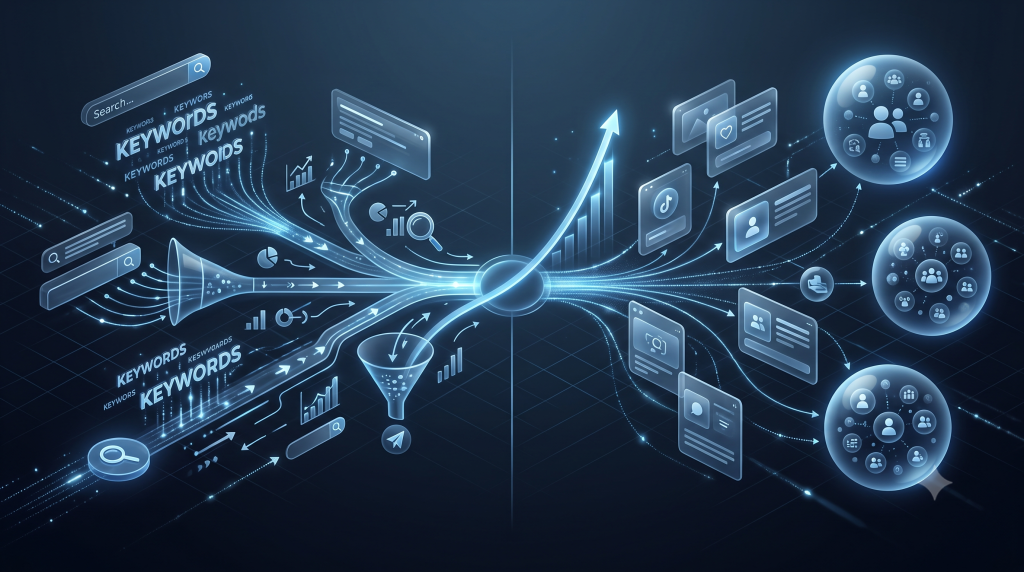
Google Ads vs Meta Ads: Which One Actually Deserves Your Budget? You’ve got a budget. Maybe it’s ₹50,000 a month. Maybe it’s $5,000. Either way, you’re staring at two dashboards — Google Ads on one screen, Meta Ads Manager on the other — and you’re wondering where the money should actually go. The question sounds dead simple: Which platform is better? But here’s the problem with that question. It assumes there’s a universal winner. There isn’t. I’ve watched businesses burn through six-figure budgets on Google Ads because their product was discovery-driven and literally nobody was typing it into a search bar. I’ve also seen brands dump money into Meta Ads for months, only to realize their best customers were already Googling them by name. The better question is: Which platform fits my business objective, my audience, and my customer journey? That’s what this guide is about. No hype. No one-size-fits-all nonsense. Just the strategic nuance that matters when real money is on the line. Google Ads vs Meta Ads: Quick Answer Google Ads reaches people through search and Google’s wider advertising ecosystem — Search, Shopping, YouTube, Display, Discover, Gmail, and Maps. It’s built around intent. People are telling Google what they want. Meta Ads reaches people across Facebook, Instagram, Messenger, and Threads. It’s built around people and behavior. Nobody’s searching. You’re interrupting a scroll — which means your creative has to earn attention. Both platforms support conversions, remarketing, and multiple funnel stages. The right choice depends on your business — not on which platform is trending on LinkedIn this week. What Are Google Ads? Google Ads is Google’s advertising platform. It lets you place paid messages across Google’s entire ecosystem — wherever people are searching, browsing, watching, or exploring. In 2026, the campaign types you actually need to know about are: Search — Text ads that show up when someone types a query. This is intent-based advertising at its purest. Shopping — Product listing ads pulled from your Merchant Center feed. Essential if you sell physical products. Performance Max (PMax) — One campaign, all Google networks. Fully automated. Great when you have clean conversion data, frustrating when you don’t. Demand Gen — Google’s social-style campaign type across YouTube Shorts, Discover, Gmail, Maps, and Display. It replaced standalone Display campaigns in 2026. Video (YouTube) — In-stream, in-feed, and Shorts ads. App — For app installs and in-app actions. AI Max for Search — The successor to Dynamic Search Ads, fully launched in 2026. It uses AI to match search terms with ads and expand query coverage automatically. Google’s core advantage is intent capture. When someone types “emergency plumber near me” or “best CRM for small business,” they’re telling Google exactly what they want. Google Ads lets you show up in that exact moment. What Are Meta Ads? Meta Ads is the advertising platform for Facebook, Instagram, Messenger, Threads, and WhatsApp. It reaches billions of people across social and messaging environments. Where Google is built around search queries, Meta is built around people and behavior. You’re advertising inside a social feed. A Stories carousel. A Reels scroll. People aren’t looking for you — you’re introducing yourself. In 2026, Meta’s system is heavily AI-driven. The centerpiece is Advantage+, Meta’s suite of automated advertising tools. It covers five core areas: Advantage+ Sales (formerly Advantage+ Shopping Campaigns) — AI-driven campaigns that blend prospecting and retargeting with dynamic budget allocation. Advantage+ Audience — You provide audience signals; Meta’s AI finds actual buyers in a broader pool. Advantage+ Placements — Automatic placement selection across Meta’s surfaces. Advantage+ Creative — AI-assisted creative variations and formatting. Advantage+ Lead Campaigns — Automated lead generation campaigns. Meta also rolled out “Describe Your Audience” in 2026. Instead of stacking interests manually, you describe your ideal customer in plain English and Meta’s AI interprets it. Meta’s core advantage is demand generation. You introduce products, brands, and offers to people who weren’t actively searching — and let your creative do the selling. Google Ads vs Meta Ads: Key Differences Factor Google Ads Meta Ads Primary environment Search, YouTube, Display, Discover, Gmail, Maps Facebook, Instagram, Messenger, Threads User intent Often high — actively searching Often low — browsing and discovering Demand type Primarily demand capture Primarily demand generation Targeting Keywords, location, audiences Interests, behavior, Custom/Lookalike audiences Creative dependence Moderate — messaging and relevance High — creative is the primary lever Lead generation High-intent leads; higher CPL but warmer Volume leads; lower CPL but colder E-commerce Strong via Shopping and PMax Strong via Advantage+ Sales Local businesses Very strong — local search intent Moderate — offers and awareness B2B Strong for high-intent searches Useful for awareness and retargeting Brand awareness YouTube and Demand Gen Very strong — visual and social Remarketing Full suite across Search, Display, YouTube Full suite — Custom Audiences, engagement AI capabilities AI Max, Smart Bidding, predictive audiences Advantage+ AI, Describe Your Audience Search Intent vs Social Discovery: The Core Distinction This is the difference that shapes everything else. High-Intent Searches (Google’s Home Turf) Someone types: “best dentist near me” or “buy running shoes online” or “Google Ads agency in India.” They know what they want. They’re comparing options. They’re ready to act. Google Ads meets them at that exact moment. The intent is already there — your job is to be the best answer. Discovery Behavior (Meta’s Home Turf) Someone’s scrolling Instagram. They see a Reel about a new skincare product. They weren’t looking for skincare. But the hook caught them. The before/after was compelling. Now they’re curious. Meta Ads creates that curiosity. You’re not answering a question — you’re planting one. Neither environment is “better.” They serve different psychological moments. The mistake is assuming one replaces the other. They don’t. Which Is More Expensive? (Spoiler: It Depends) There’s no universal answer. Anyone who tells you otherwise is selling something. Google Ads Cost Factors Keyword competition and search demand Location and industry Bid strategy and quality score Campaign type (Search vs Shopping vs PMax) Conversion rate and landing-page experience Meta Ads

Uncategorized

Google Ads in 2026: What’s Changed?

Let’s Talk About What’s Actually Going On I’ve been in this game for a long time, and I’ll be honest: the last two years have been the most disorienting stretch I can remember. Not because the platform got worse — in some ways it got better. But because the mental model most of us built our careers on (pick keywords, write ads, set bids, watch the numbers) doesn’t map cleanly to how Google Ads works anymore. In 2026, you’re not really managing campaigns in the old sense. You’re feeding a machine. You’re giving it data, guardrails, creative, and business context. Then you’re watching what it does and course-correcting when it drifts. That’s a different job. Some people love it. Some people hate it. But it’s where the platform is. Here’s what I want to walk through in this article: what genuinely changed, what’s just a rename, what’s still being tested, and what you should actually do about it. No breathless hype. No “AI changes everything” nonsense. Just what’s real and what it means for your account. Google Ads Then vs. Now: A Side-by-Side Look This table isn’t here to say the old ways were wrong. They weren’t. They were right for the time. But the platform moved, and the map needs updating. What You’re Managing The Old Way 2026 Reality Keywords Your targeting = your keyword list Keywords guide matching; AI reads intent and context too Bidding You set and adjusted bids daily Smart Bidding handles auctions; you set targets and values Ads You wrote every headline You provide assets; AI assembles and customizes Landing Pages One URL per ad group AI can match queries to different pages automatically Optimization You analyzed search terms weekly AI optimizes in real time; you audit and set guardrails Reporting You pulled reports and built spreadsheets AI generates dashboards from prompts; you interpret them The Changes That Actually Matter in 2026 There are a lot of updates floating around. Some are cosmetic. Some are structural. Here are the ones that actually require you to do something different. 1. AI Max Is Now the Default Direction for Search What happened: AI Max came out of beta in April 2026. It bundles search term matching, AI-generated ad text, and automatic landing page selection into one system. It’s designed to catch queries that keyword targeting alone would miss — the ones real people type that don’t match your carefully built list. Why it matters: Google says campaigns using the full AI Max suite see about 7% more conversions or conversion value at a similar CPA or ROAS. That’s not nothing. But it also means the machine is making more decisions about who sees your ads and where they land. What to do: If you’re still running Dynamic Search Ads, start planning the migration. Review your brand controls, negative keyword lists, and text guidelines — those are your steering wheel now. Test AI Max on a subset of campaigns before rolling it out everywhere. What not to assume: AI Max isn’t a magic upgrade. It amplifies whatever signals you feed it. Bad data in, bad performance out — just faster and at larger scale. 2. Dynamic Search Ads Are Being Phased Out What happened: Google announced DSA retirement in April 2026. Eligible campaigns were set to auto-upgrade to AI Max starting September 2026, but after pushback from advertisers, Google extended the timeline to February 2027 for DSA. Campaigns using automatically created assets and campaign-level broad match settings will still auto-upgrade starting September 2026. What to do: Don’t wait. Audit your DSA campaigns now, understand what’s actually driving performance, and migrate deliberately. Auto-upgrade is convenient but it doesn’t give you a chance to test first. 3. Target CPA and Target ROAS Are Back — Kind Of What happened: In June 2026, Google restored Target CPA and Target ROAS as standalone bidding options. Previously they were nested under “Maximize conversions” and “Maximize conversion value.” Now they’re just called “Target CPA” and “Target ROAS.” Here’s the important part: This is a label change, not a behavior change. Google’s own documentation says the bidding logic is exactly the same. Don’t panic-edit your campaigns thinking something fundamental shifted. But also: Starting August 17, 2026, budget-limited campaigns using these strategies will optimize more closely toward the stated target instead of overdelivering. If your campaign has been beating its target CPA consistently, you might see performance shift. Review your targets before that date. 4. Ads Are Now Inside AI Mode What happened: Google introduced shopping ads into AI Mode in February 2026, when the surface was running 75+ million daily users. Since then, they’ve been testing new formats like Conversational Discovery ads and Highlighted Answers. As of August 2026, ads from Performance Max, Shopping, AI Max, and Broad Match campaigns show up in AI Mode in the US. What to do: If you sell products, make sure your Merchant Center feed is clean and complete. AI Mode ads pull from your feed data. If you run Performance Max, you’re already eligible. Focus on feed quality and conversational product descriptions rather than trying to force specific keywords. Frustrating reality: Google still doesn’t let you segment AI Mode delivery in reporting. You can’t isolate it and measure it separately. That’s a real limitation right now. 5. Enhanced Conversions Got Simpler What happened: Google merged enhanced conversions for web and enhanced conversions for leads into one unified feature. Starting April 2026, you can send user-provided data from website tags, Data Manager, or API — and Google will accept all of them simultaneously. Starting June 15, 2026, offline conversion imports moved to the Data Manager API. Why it matters: Enhanced conversions typically recover 15–25% of conversions that get lost to cookie restrictions. With a simpler setup, more advertisers can actually use it. What to do: Verify your enhanced conversions are actually working. If you import offline conversions through the Google Ads API, migrate to the Data Manager API before June 2026 to avoid breakage. 6. Performance Max Got

Scroll to Top