
Introduction
Two business owners sit across from each other at a networking event. Both run successful companies. Both have marketing budgets. But they’re asking completely different questions.
The first says: “Nobody knows who we are. We need to get our name out there.”
The second says: “People know us, but we’re not getting enough qualified leads. We need more inquiries.”
Same marketing dilemma, opposite problems. This is why the question “brand awareness vs lead generation — which is more important?” doesn’t have a one-size-fits-all answer.
The right balance depends on where your business is today, where you want to go, and how your customers actually buy. This guide breaks down both strategies, explains when each deserves more attention, and gives you a practical framework to decide where your marketing resources should go.
What Is Brand Awareness?
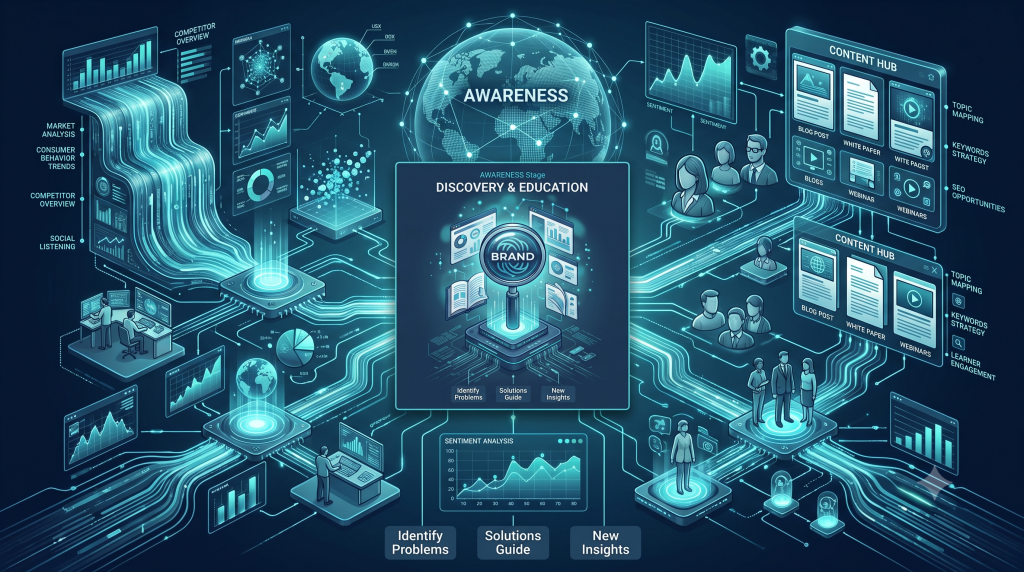
Brand awareness is the degree to which your target audience recognizes and remembers your brand. It’s what makes someone think of you when they need a product or service in your category.
When brand awareness is strong, people don’t just know your name — they understand what you stand for, what you offer, and why you might be worth considering. It’s the difference between a prospect saying “I’ve heard of them” and “I know exactly what they do and I trust them.”
Why Brand Awareness Matters
Brand awareness sits at the top of the marketing funnel and influences every stage that follows:
- Recognition: People are more likely to choose a brand they recognize, even subconsciously.
- Trust: Familiarity breeds comfort. A brand seen repeatedly feels safer than a stranger.
- Consideration: When someone is ready to buy, awareness determines which brands make the shortlist.
- Organic demand: Strong brands generate branded searches — people typing your name directly into Google.
- Lower friction: Familiar prospects move through sales conversations faster and question less.
Examples of Brand Awareness Activities
- Social media content that educates or entertains
- SEO content that answers your audience’s questions
- YouTube videos and podcasts
- PR and media coverage
- Influencer partnerships
- Display and programmatic advertising
- Community events and sponsorships
- Branded content and storytelling campaigns
Brand awareness doesn’t automatically produce sales. It creates the conditions where sales become easier — but only if there’s a path from awareness to conversion.
What Is Lead Generation?
Lead generation is the process of attracting and capturing interest from potential customers in exchange for contact information. A lead is someone who has raised their hand and said, “I’m interested enough to share my details.”
Not all leads are equal. Most businesses distinguish between:
- Marketing Qualified Leads (MQLs): Leads who match your target profile and have shown engagement, but aren’t ready for a sales conversation yet.
- Sales Qualified Leads (SQLs): Leads who have been vetted and are ready to talk to your sales team.
The Lead Generation Process
- Attract — Drive traffic through ads, SEO, social media, or content.
- Capture — Convert visitors into leads using forms, lead magnets, or gated content.
- Qualify — Score and segment leads based on fit and intent.
- Nurture — Build trust through email sequences, retargeting, and valuable content.
- Convert — Hand qualified leads to sales or guide them to purchase.
Examples of Lead Generation Campaigns
- Landing pages with lead capture forms
- Free consultations or audits
- Webinars and live demos
- Downloadable guides, templates, or tools
- Email newsletter signups
- Retargeting ads with a clear offer
- Conversion-focused SEO (content designed to drive action)
Lead generation gives you measurable pipeline and a database of prospects you can market to repeatedly. But it has limitations: leads without trust are hard to close, and lead volume without quality is just noise.
Brand Awareness vs Lead Generation: Key Differences
| Factor | Brand Awareness | Lead Generation |
|---|---|---|
| Primary goal | Get known and remembered | Capture contact info and create sales opportunities |
| Funnel stage | Top of funnel (TOFU) | Middle to bottom of funnel (MOFU/BOFU) |
| Main focus | Reach, recognition, perception | Action, conversion, pipeline |
| Typical audience | Broad target market | Qualified prospects showing intent |
| Common channels | Social, video, PR, SEO, display, podcasts | Landing pages, search ads, social ads, email, webinars |
| Main KPIs | Reach, impressions, branded search, share of voice | Leads, cost per lead, conversion rate, pipeline value |
| Time horizon | Medium to long term | Short to medium term |
| Conversion focus | Indirect — builds future demand | Direct — captures existing demand |
| Business objective | Market presence and long-term growth | Immediate inquiries and sales opportunities |
Why Brand Awareness Matters
Brand awareness is not vanity. It’s the foundation that makes every other marketing activity more effective.
When people already know your brand:
- Your ads perform better because they’re not introducing a stranger.
- Your content gets more engagement because there’s existing trust.
- Your sales team spends less time explaining who you are.
- Your leads convert at higher rates because familiarity reduces risk.
- Your customers refer you more often because you’re top of mind.
Brand awareness also compounds. Unlike a lead generation campaign that stops producing the moment you stop paying, awareness builds over time. It creates a moat that competitors can’t easily replicate.
That said, awareness alone doesn’t pay the bills. A business can be well-known and still struggle if there’s no clear path from recognition to revenue.
Why Lead Generation Matters
Lead generation turns marketing into a measurable engine. It gives you:
- A prospect database you own and can market to repeatedly
- Sales opportunities your team can follow up on
- Inquiries that indicate real interest
- Measurable performance through cost per lead, conversion rate, and pipeline value
- Predictable acquisition when systems are optimized
- Faster feedback loops for testing messaging and offers
For sales-driven businesses, lead generation is often the difference between hoping for revenue and planning for it.
But lead generation has limits too. If your brand is unknown, your cost per lead will be higher. If your offer isn’t compelling, your conversion rate will suffer. If your sales team can’t follow up effectively, leads go cold. And if you only focus on leads, you may find yourself constantly paying for attention that a strong brand would have earned organically.
Brand Awareness vs Lead Generation: Which Is More Important?
Here’s the honest answer: it depends. But not in a vague way. There are clear situations where one deserves more attention than the other.
When Brand Awareness May Deserve Greater Attention
- You’re a new business with little to no market recognition
- You’re launching a new product or entering a new market
- Your industry is highly competitive and crowded
- Your customer journey is long, with multiple touchpoints before purchase
- Your target audience doesn’t yet know they need your solution
- Your competitors are more recognizable than you
- You’re playing a long game and want to build durable demand
In these situations, pouring money into lead generation without awareness is like trying to fill a bucket with a hole in it. You’ll get some leads, but you’ll pay a premium for every one.
When Lead Generation May Deserve Greater Attention
- Your brand is already well-known in your market
- You need immediate qualified inquiries to hit revenue targets
- Your sales cycle is short and your offer is clear
- You have a proven conversion system and sales process
- Your target audience is actively searching for what you offer
- You need measurable ROI and predictable acquisition costs
- You’re optimizing an existing funnel rather than building from scratch
When Both Should Be Prioritized
Most established businesses should invest in both. Awareness feeds leads, and leads validate awareness. The key is understanding how they work together across the customer journey:
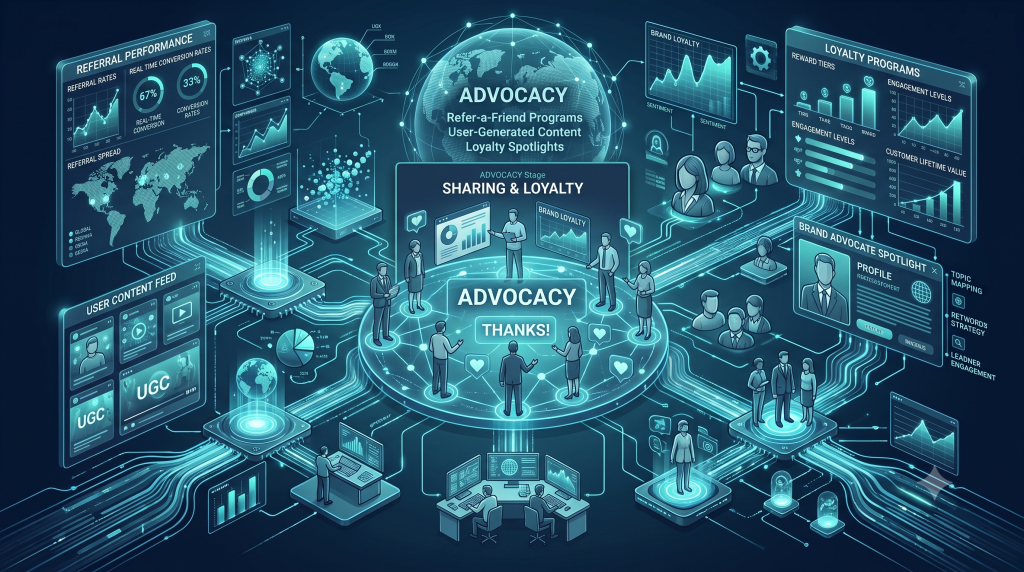
Awareness → Interest → Consideration → Lead → Nurturing → Conversion → Retention → Advocacy
Brand Awareness and Lead Generation Work Together
The most effective marketing strategies don’t choose between awareness and lead generation — they connect them.
Example 1: Social Media Content → Lead Capture
A business posts educational content on LinkedIn. The content builds awareness and positions the brand as an expert. Interested viewers click through to a landing page offering a free guide and enter their email to download it. Now the business has a lead — and a reason to follow up.
Social media content → Brand awareness → Website visit → Lead magnet → Email capture → Nurturing → Sales
Example 2: SEO Content → Conversion
A company writes in-depth articles answering common industry questions. These articles rank in search results and bring in organic traffic. Some visitors are ready to act — they click a call-to-action, fill out a form, and become leads.
SEO content → Search visibility → Brand discovery → Website visit → Conversion → Lead
Example 3: Paid Advertising → Retargeting → Lead Generation
A business runs awareness-focused video ads to a broad audience. Most viewers don’t convert immediately, so the business retargets them with a lead-focused offer. The familiarity from the first touch makes the second touch more effective.
Paid advertising → Awareness → Retargeting → Lead generation → Conversion
In each case, awareness and lead generation aren’t competing. They’re sequential. Awareness creates the context that makes lead generation work.
Channel Comparison: Where to Invest
Many channels can support both objectives. The difference is in how you use them and what you measure.
Brand Awareness Channels
- Social media (organic and paid)
- Video content (YouTube, TikTok, LinkedIn)
- SEO and content marketing
- Influencer and creator partnerships
- PR and media coverage
- Display and programmatic advertising
- Podcasts and audio
- Community building and events
- Branded content and storytelling
Lead Generation Channels
- Landing pages and lead forms
- Search advertising (Google Ads, Bing Ads)
- Social advertising with lead objectives
- Email marketing and newsletters
- Lead magnets (guides, templates, tools)
- Webinars and live demos
- Free consultations or audits
- Gated resources
- Retargeting campaigns
- Conversion-focused SEO
The most sophisticated businesses use the same channel for both purposes. A blog post, for example, can build awareness through organic reach while also capturing leads through a well-placed call-to-action.
How to Measure Brand Awareness
Brand awareness is harder to measure than lead generation, but it’s not impossible. Relevant KPIs include:
- Branded search volume: How many people search for your brand name?
- Reach and impressions: How many people see your content?
- Share of voice: How much of your industry conversation mentions your brand?
- Direct traffic: How many people visit your site directly?
- Social mentions and engagement: How often is your brand talked about?
- Video views and watch time: How many people consume your video content?
- Audience growth: Is your following growing over time?
- Brand recall and recognition: Survey-based metrics where reliable measurement is available
Be careful with vanity metrics. A million impressions mean nothing if none of those people are in your target market. Focus on metrics that correlate with business outcomes — branded search, direct traffic, and engagement quality.
How to Measure Lead Generation
Lead generation is more directly measurable. Key metrics include:
- Number of leads: How many leads did you generate?
- Qualified leads: How many match your ideal customer profile?
- Conversion rate: What percentage of visitors became leads?
- Cost per lead (CPL): How much did you spend to acquire each lead?
- Customer acquisition cost (CAC): Total cost to acquire a customer.
- Lead-to-customer rate: Percentage of leads that become customers.
- MQLs and SQLs: Marketing- and sales-qualified lead counts.
- Pipeline contribution: Revenue in your pipeline from marketing.
- Revenue generated: Actual revenue attributed to marketing.
Lead volume alone is not enough. A thousand unqualified leads are less valuable than ten qualified ones. Always measure quality alongside quantity.
How to Allocate Your Marketing Budget
There’s no universal percentage split between brand awareness and lead generation. The right allocation depends on your specific situation.
Consider these factors:
- Business maturity: New businesses need more awareness. Established businesses can focus more on leads.
- Revenue goals: Short-term targets may require lead generation. Long-term growth needs awareness.
- Existing awareness: If nobody knows you, awareness comes first.
- Customer acquisition cost: If CAC is high, awareness can lower it over time.
- Sales cycle: Long cycles benefit from sustained awareness. Short cycles can focus on leads.
- Available budget: Smaller budgets may prioritize one objective. Larger budgets can do both.
- Conversion rate: If your funnel converts well, drive more traffic. If not, fix conversion first.
- Industry and competition: Crowded markets require more awareness to stand out.
- Growth stage: Early-stage companies build awareness. Growth-stage companies scale lead generation.
- Customer lifetime value: High LTV justifies more investment in awareness and retention.
Example Scenarios
Startup with little market recognition:
Prioritize awareness first. Without recognition, lead generation campaigns will be expensive and inefficient. Invest in content, social media, and PR to build visibility. Layer in lead capture once traffic starts flowing.
Established local business:
Focus more on lead generation. People already know the brand. The priority is capturing demand through optimized landing pages, local search ads, and referral programs. Continue light awareness activity to stay top of mind.
B2B company with a long sales cycle:
Buyers rarely convert on the first touch. Awareness and education are critical. Invest in thought leadership, webinars, and content that builds trust over time. Lead generation should focus on capturing interest early and nurturing it through a long consideration period.
E-commerce business:
Balance awareness, acquisition, conversion, and retention. Awareness drives new traffic. Conversion optimization turns visitors into buyers. Email and retargeting bring them back. Retention programs increase lifetime value.
These are illustrative examples, not universal rules. Your situation is unique.
The Awareness-to-Lead Decision Framework
Use these questions to determine where your marketing resources should go:
- Does our target audience already know our brand? If not, awareness deserves more attention.
- Are people searching for our brand by name? Branded search is a strong signal of awareness.
- Are we generating enough qualified leads? If not, lead generation needs work.
- Is our website converting visitors? If not, fix conversion before driving more traffic.
- Do we have a clear lead capture system? Without it, traffic is wasted.
- Is our sales team able to follow up effectively? Leads are useless if nobody contacts them.
- Is our customer journey long or short? Long journeys need more nurturing and awareness.
- Are competitors more recognizable? If so, awareness investment is urgent.
- Are we launching a new product or entering a new market? Awareness comes first.
- Are we optimizing for short-term acquisition or long-term growth? This determines your balance.
How to Use the Framework
If you answered “no” to questions 1, 2, 8, or 9 → Prioritize awareness.
If you answered “no” to questions 3, 4, 5, or 6 → Prioritize lead generation infrastructure.
If you answered “yes” to most questions → You’re in a position to invest in both.
If you’re unsure → Start with awareness. It makes everything else easier.
Real-World Examples
Example 1: New Digital Marketing Agency
A new agency has no brand recognition. They start by publishing helpful content on LinkedIn and their blog. They attend industry events and speak on podcasts. As awareness grows, they launch a lead magnet — a free marketing audit. Prospects who have seen their content are more likely to request the audit. The agency now has a pipeline of qualified leads who already trust them.
Example 2: Established E-commerce Brand
An e-commerce brand with strong recognition wants to grow revenue. They already have a loyal customer base and high brand recall. They focus on conversion rate optimization, retargeting, and email marketing to increase repeat purchases. They continue awareness activity through social media and influencer partnerships to attract new customers, but the primary focus is on converting existing demand.
Example 3: B2B SaaS Company
A B2B SaaS company sells a complex product with a long sales cycle. Buyers need education before they’re ready for a demo. The company invests heavily in SEO content, webinars, and case studies. They capture leads through gated resources and nurture them with email sequences. By the time a prospect books a demo, they already understand the product and trust the brand.
These examples illustrate different starting points and priorities. They are not universal templates.
Common Mistakes Businesses Make
1. Focusing Only on Immediate Leads
The mistake: Pouring all budget into lead generation without building awareness.
The solution: Invest in awareness to reduce long-term acquisition costs and build durable demand.
2. Treating Awareness as Vanity
The mistake: Dismissing brand awareness as “just likes and followers.”
The solution: Measure awareness through branded search, direct traffic, and pipeline influence.
3. Measuring Awareness Only Through Likes
The mistake: Equating social engagement with brand strength.
The solution: Track branded search growth, share of voice, and customer surveys.
4. Measuring Lead Generation Only Through Lead Volume
The mistake: Celebrating high lead numbers without checking quality.
The solution: Track qualified leads, conversion rates, and cost per acquisition alongside volume.
5. Ignoring Lead Quality
The mistake: Chasing every lead regardless of fit.
The solution: Define your ideal customer profile and score leads accordingly.
6. Ignoring Nurturing
The mistake: Capturing leads and expecting immediate sales.
The solution: Build email sequences and retargeting campaigns to nurture leads over time.
7. Running Campaigns Without Clear Customer Journeys
The mistake: Driving traffic to pages that don’t guide the next step.
The solution: Map the journey from first touch to conversion and optimize each stage.
8. Sending Cold Traffic to Poorly Optimized Landing Pages
The mistake: Spending on ads but losing visitors on the landing page.
The solution: Invest in conversion rate optimization before scaling traffic.
9. Creating Awareness Without a Path to Conversion
The mistake: Building visibility but giving people nothing to do next.
The solution: Every awareness campaign should have a clear next step.
10. Generating Leads Without Building Trust
The mistake: Asking for contact information before establishing credibility.
The solution: Lead with value. Educate or solve a problem before asking for anything.
11. Expecting Immediate ROI from Awareness Campaigns
The mistake: Judging brand campaigns by short-term lead numbers.
The solution: Measure awareness with appropriate time horizons and leading indicators.
FAQ: Brand Awareness vs Lead Generation
Is brand awareness more important than lead generation?
Neither is universally more important. Brand awareness builds long-term demand and trust, while lead generation captures existing interest and drives short-term revenue. The right priority depends on your business stage, goals, and market.
What is the difference between brand awareness and lead generation?
Brand awareness focuses on getting your target audience to know and remember your brand. Lead generation focuses on capturing contact information and creating sales opportunities. Awareness is about reach and recognition; lead generation is about action and conversion.
Can brand awareness generate leads?
Yes. Strong brand awareness makes lead generation more effective. When people already know and trust your brand, they’re more likely to engage with your offers, fill out forms, and request demos.
Should startups focus on brand awareness or lead generation?
Most startups should prioritize awareness first. Without recognition, lead generation is expensive and inefficient. Build visibility, then layer in lead capture as traffic grows.
Can you generate leads without brand awareness?
Yes, but it’s harder and more expensive. You can run ads and capture leads without prior awareness, but conversion rates will be lower and costs higher. Awareness makes lead generation more efficient.
How do you measure brand awareness?
Measure branded search volume, direct traffic, share of voice, social mentions, reach, engagement, and audience growth. Survey-based brand recall and recognition metrics are useful where reliable measurement is available.
How do you measure lead generation?
Track number of leads, qualified leads, conversion rate, cost per lead, customer acquisition cost, lead-to-customer rate, pipeline contribution, and revenue generated.
Which marketing channels are best for brand awareness?
Social media, video content, SEO, content marketing, influencer partnerships, PR, display advertising, podcasts, community events, and branded content.
Which marketing channels are best for lead generation?
Landing pages, search advertising, social advertising, email marketing, lead magnets, webinars, free consultations, gated resources, retargeting, and conversion-focused SEO.
How can businesses combine brand awareness and lead generation?
Use awareness campaigns to build familiarity, then retarget engaged audiences with lead-focused offers. Create content that educates while capturing interest. Build funnels where awareness leads naturally into lead capture and nurturing.
How much should a business spend on brand awareness?
There’s no universal percentage. The right amount depends on your business maturity, competition, goals, and budget. New businesses typically need to invest more in awareness. Established businesses can allocate more to lead generation.
How long does it take to build brand awareness?
Brand awareness is a long-term investment. Depending on your industry, competition, and investment level, meaningful awareness can take months to years. Consistency matters more than speed.
Final Takeaway
The question isn’t really “brand awareness vs lead generation.” It’s “what does my business need right now, and how do I build a system where both work together?”
If you’re new, unknown, or entering a new market, awareness should lead. If you’re established with a proven offer, lead generation should drive. Most businesses need both, with the balance shifting as they grow.
Start by asking the ten questions in the Awareness-to-Lead Decision Framework. Identify where your gaps are. Fix the foundation before scaling. And remember that awareness and lead generation aren’t opposing strategies — they’re two ends of the same funnel.
Your Next Step
Audit your current marketing. Are you generating enough qualified leads? Is your brand recognizable to your target audience? Whichever answer is “no” is where your next investment should go.
Suggested Internal Links
- SEO services → /seo-services/
- Social media marketing → /social-media-marketing/
- Content marketing → /content-marketing/
- Google Ads management → /google-ads/
- Email marketing → /email-marketing/
- Conversion rate optimization → /cro-services/
- Lead generation services → /lead-generation/
- Digital marketing strategy → /digital-marketing-strategy/
Not Sure Whether Your Business Needs More Brand Awareness or Better Lead Generation?
Take a closer look at your marketing funnel. Identify the gaps. Then decide where to invest.
If you want a second opinion, we’re here to help. Our team can audit your current strategy and recommend a practical path forward — whether that’s building awareness, optimizing lead generation, or both.